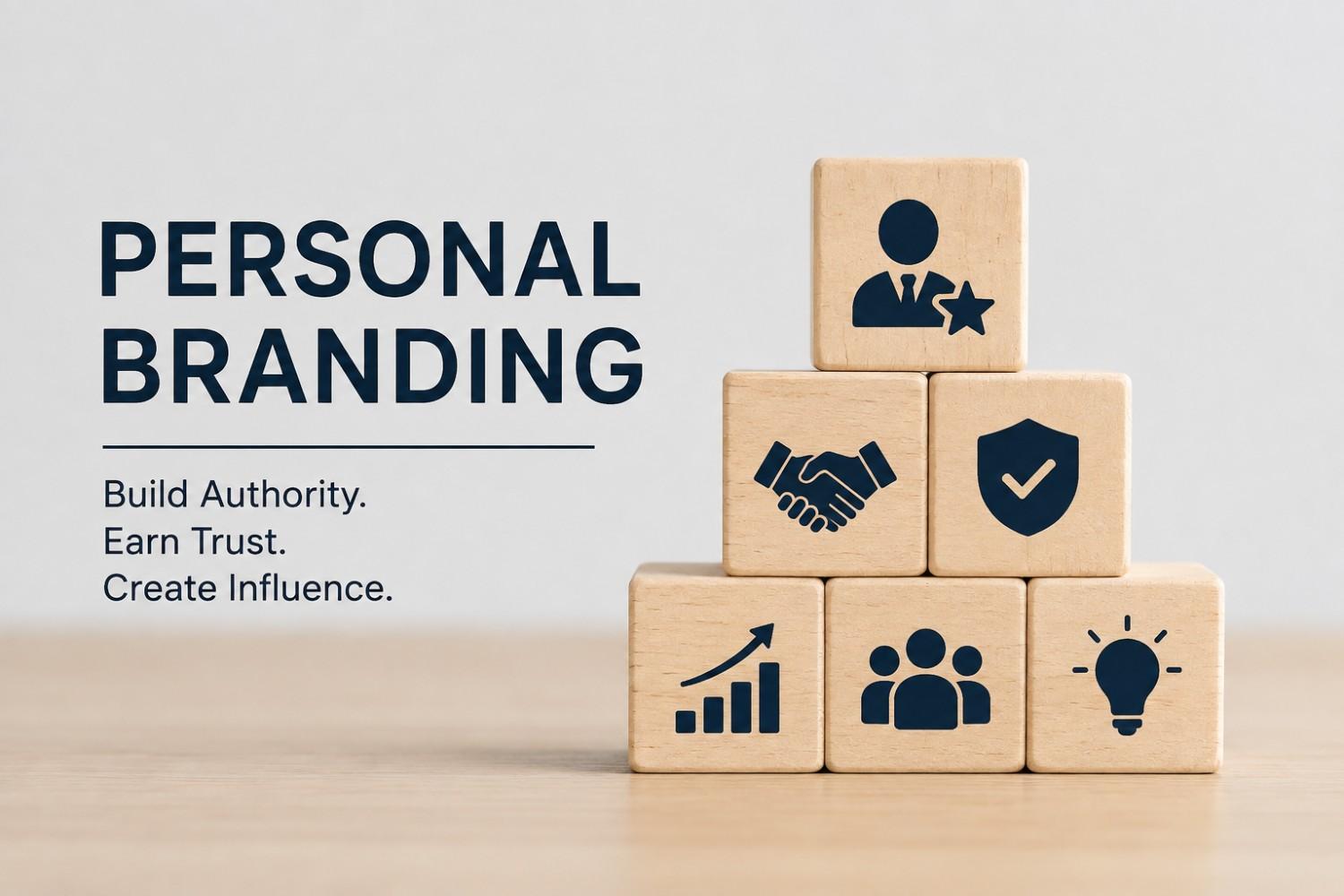
In a competitive business environment, having a strong company is no longer the only factor that shapes how people perceive a business leader. Customers, investors, employees, partners, journalists, and industry peers increasingly want to know the person behind the organization.
What does the leader stand for?
What do they know?
What perspective do they bring to the industry?
And why should people trust their expertise?
This is where personal branding for founders, CEOs and entrepreneurs becomes important.
Personal branding is not about becoming famous or constantly promoting yourself on social media. It is about intentionally building a professional identity around your expertise, experience, ideas, credibility, visibility, and values.
For business leaders, a strong personal brand can become a long-term professional asset—helping them build authority, strengthen trust, create meaningful relationships, attract opportunities, and contribute to the growth of their businesses.
What Is Personal Branding?
Personal branding is the process of intentionally shaping how you are known, perceived, and remembered within your professional or industry ecosystem.
Your personal brand is not simply your LinkedIn profile, logo, photograph, website, or social media presence.
It is the combination of:
What you know + what you say + what you do + where you are visible + what others say about you.
For a founder or CEO, this could mean becoming recognized for expertise in a particular industry, developing a distinct point of view, regularly sharing useful insights, participating in industry conversations, appearing in relevant media, and consistently demonstrating expertise.
A strong personal brand answers one important question:
“What should people immediately associate with your name?”
For example, a technology entrepreneur may want to be recognized for AI innovation. A marketing leader may want to become known for brand growth. A sustainability entrepreneur may build authority around responsible business and sustainable innovation.
The objective is not to talk about everything.
It is to own a meaningful space in the minds of the right audience.
Why Personal Branding Matters for Founders, CEOs & Entrepreneurs
A company’s reputation and a leader’s reputation can influence each other.
When people recognize a business leader as knowledgeable, credible, and trustworthy, that perception can contribute positively to how they view the organization as well.
A strong personal brand can help business leaders:
Build Trust
People often connect with people before they connect deeply with companies.
Sharing expertise, experiences, lessons, and informed perspectives allows audiences to understand the person behind the business.
Establish Authority
Consistently demonstrating expertise can help a leader become associated with a particular subject or industry.
Authority is built over time—not through one viral post.
Increase Visibility
A business leader may have significant expertise but remain relatively unknown outside their immediate network.
Strategic content, media exposure, speaking opportunities, interviews, and industry participation can expand that visibility.
Create New Opportunities
A credible personal brand can attract conversations that may not otherwise happen.
These could include:
- Business partnerships
- Speaking invitations
- Media opportunities
- Industry collaborations
- Customer enquiries
- Investor conversations
- Talent opportunities
- Professional networking
Strengthen the Company Brand
When a leader communicates a clear vision and demonstrates expertise, it can complement the company’s positioning and make the organization more relatable and credible.
Personal Brand vs. Company Brand
Personal branding and corporate branding are different—but they should work together.
Company branding focuses on the organization, including its products, services, values, positioning, and market identity.
Personal branding focuses on the individual leader—their expertise, ideas, experiences, leadership style, and professional reputation.
A company may say:
“We provide innovative technology solutions.”
The founder might say:
“Here is what I believe businesses should do differently when adopting technology.”
The company communicates what it does.
The leader communicates knowledge, perspective, and leadership.
When both are aligned, they can create a stronger overall brand ecosystem.
The 6 Pillars of a Strong Personal Brand
Building a meaningful personal brand requires more than posting regularly. Six elements are particularly important.
1. Expertise
Start with what you genuinely know.
Identify the subjects where your experience, knowledge, and professional exposure give you something valuable to contribute.
Your expertise becomes the foundation of your personal brand.
2. Positioning
Ask yourself:
“What do I want to be known for?”
A broad statement such as “I am an entrepreneur” is not very distinctive.
A clearer positioning could be:
- Technology entrepreneur focused on AI adoption
- Business leader focused on sustainable manufacturing
- Marketing expert helping startups build scalable brands
- Finance professional focused on business transformation
Strong positioning makes your expertise easier to understand and remember.
3. Visibility
Expertise has limited impact if nobody can discover it.
Visibility can come from:
- Industry publications
- Business media
- Podcasts
- Conferences
- Webinars
- Interviews
- Professional communities
- Guest articles
- Speaking engagements
The objective is not to be everywhere.
It is to be visible in the places where your audience actually pays attention.
4. Content
Content gives your expertise a public voice.
Instead of constantly talking about yourself, share ideas that help your audience.
You can create:
- Industry insights
- Opinion pieces
- Educational posts
- Case studies
- Business lessons
- Expert commentary
- Research-based articles
- Videos
- Interviews
- Practical frameworks
The strongest personal brands often teach more than they promote.
5. Credibility
Visibility alone does not create authority.
People need evidence.
Credibility can be strengthened through:
- Professional experience
- Business achievements
- Industry participation
- Published articles
- Media mentions
- Speaking engagements
- Interviews
- Research
- Case studies
- Relevant credentials
The goal is to give your audience reasons to believe your expertise.
6. Consistency
Personal branding is not a one-month campaign.
Your positioning, communication, content, and professional presence should remain reasonably consistent over time.
Consistency helps people repeatedly associate your name with your area of expertise.
How to Build Your Personal Brand Step by Step
A practical personal branding strategy can begin with ten steps.
Step 1: Define Your Expertise
List the subjects you understand deeply based on your experience.
Choose two or three areas where you can consistently provide valuable insights.
Step 2: Identify Your Audience
Your personal brand should be relevant to a specific audience.
Ask:
- Who do I want to reach?
- What problems do they face?
- What information do they need?
- What decisions can my expertise help them make?
Step 3: Create Your Positioning
Develop a simple statement explaining:
Who you are + what you specialize in + whom you help + what perspective you bring.
This becomes the foundation of your communication.
Step 4: Build a Professional Digital Presence
Review your:
- LinkedIn profile
- Website
- Author profiles
- Social media accounts
- Professional biographies
- Search results
Make sure they communicate a consistent professional identity.
Step 5: Develop Content Pillars
Choose three to five recurring subjects.
For example:
Expertise: Industry knowledge
Insights: Your opinions and perspectives
Experience: Lessons from building a business
Education: Practical advice
Leadership: Your approach to people and business
This makes content creation more structured.
Step 6: Share Valuable Content
Focus on helping your audience understand something better.
Instead of:
“I am excited to announce our latest achievement.”
Consider:
“Three lessons we learned while scaling this business—and what other companies can learn from them.”
The second approach provides value while still communicating your experience.
Step 7: Build Media Visibility
Media can play an important role in strengthening professional credibility.
Relevant opportunities may include:
- Expert commentary
- Founder profiles
- Business interviews
- Thought leadership articles
- Industry features
- Event coverage
- Expert contributions
The objective should be relevance and credibility, rather than simply collecting media logos.
Step 8: Participate in Industry Conversations
Personal branding is not only about publishing your own content.
Comment on industry developments. Participate in professional discussions. Attend events. Speak on relevant topics. Connect with other experts.
Influence grows through participation.
Step 9: Build Thought Leadership
Thought leadership goes beyond sharing information.
It involves developing and communicating a clear point of view.
Ask:
What do I believe about my industry that is useful, relevant, and worth discussing?
Your ideas, frameworks, observations, and experiences can become the foundation of your thought leadership.
Step 10: Measure and Improve
Review what is actually working.
Look at:
- Profile visits
- Relevant audience growth
- Content engagement
- Media mentions
- Speaking opportunities
- Interview invitations
- Qualified enquiries
- Partnerships
- Search visibility
Do not measure your personal brand only through follower count.
The Role of Content in Personal Branding
Content is one of the most accessible ways to demonstrate expertise.
However, successful personal branding does not require publishing something every day.
It requires publishing something worth remembering.
A founder could create a weekly series discussing lessons from building a company.
A CEO could share perspectives on industry trends.
An entrepreneur could explain common mistakes customers make.
A professional could publish practical frameworks based on years of experience.
Over time, these individual pieces of content can create a recognizable body of expertise.
How PR & Media Can Strengthen Personal Branding
Content allows leaders to communicate directly with their audience.
PR and media visibility can complement that communication by placing their expertise in broader editorial and professional environments.
For example, a business leader may contribute an expert opinion to a business story, participate in an interview, publish a thought leadership article, or be included in a relevant industry feature.
The important principle is relevance.
Being mentioned in a publication is not automatically valuable.
The opportunity becomes more meaningful when the publication, topic, audience, and positioning align with the leader’s expertise.
Strategic media visibility can therefore become one component of a broader executive visibility strategy.
Common Personal Branding Mistakes
Many professionals approach personal branding with the wrong priorities.
Focusing Only on Followers
A large audience is not necessarily a relevant audience.
A smaller network of industry decision-makers can sometimes be more valuable than thousands of unrelated followers.
Talking Only About Yourself
Personal branding should not become continuous self-promotion.
Teach, explain, analyze, and contribute.
Copying Other Personal Brands
Your personal brand should reflect your actual experience and perspective.
What works for one entrepreneur may not work for another.
Being Inconsistent
Changing your positioning every few weeks makes it difficult for people to understand what you represent.
Making Exaggerated Claims
Credibility is difficult to build and easy to damage.
Avoid unsupported claims about expertise, achievements, media coverage, rankings, or business results.
Treating Personal Branding as a Short-Term Campaign
Authority develops through repeated exposure and demonstrated expertise.
It is a long-term professional investment.
A Practical 90-Day Personal Branding Framework
Month 1: Build the Foundation
Focus on:
- Defining your expertise
- Identifying your audience
- Creating your positioning
- Optimizing professional profiles
- Selecting content pillars
- Developing your professional biography
Month 2: Increase Visibility
Focus on:
- Consistent content
- Industry conversations
- Networking
- Expert contributions
- Interviews
- Podcasts
- Events
- Relevant media opportunities
Month 3: Build Authority
Focus on:
- Thought leadership articles
- Original insights
- Research-based content
- Speaking opportunities
- Industry collaborations
- Media positioning
- Developing signature ideas or frameworks
At the end of 90 days, review what generated meaningful engagement and opportunities, then refine the strategy.
How to Measure Personal Branding Success
Personal branding should ultimately contribute to professional outcomes.
Useful indicators include:
Visibility: Are more relevant people discovering you?
Engagement: Are people interacting with your ideas?
Credibility: Are you receiving invitations to contribute, speak, or participate?
Authority: Are people beginning to associate you with a specific area of expertise?
Opportunities: Are new conversations, partnerships, enquiries, or collaborations emerging?
Search presence: Does your name increasingly appear alongside your professional expertise?
These indicators provide a more meaningful picture than follower numbers alone.
Personal Branding Is a Long-Term Business Asset
A strong personal brand is not built by posting a few social media updates or appearing in one publication.
It is built through the repeated combination of:
Expertise → Content → Visibility → Credibility → Trust → Authority
For founders, CEOs, entrepreneurs, and other business leaders, the opportunity is to move beyond simply being visible and become recognizable for something valuable.
Your company may change.
Your products may evolve.
Markets may shift.
But the professional authority you build around your expertise can continue to create value throughout your career.
That is why personal branding should not be treated simply as a marketing activity. It can become an important part of a leader’s broader professional visibility, reputation, and business growth strategy.
Building Visibility With Purpose
At QI Media, we believe professional visibility is most effective when it is built around genuine expertise, meaningful content, strategic positioning, and credible opportunities to be discovered.
From thought leadership and professional content to media visibility and strategic positioning, the objective should not simply be to make a leader more visible—but to help them become more relevant, credible, and recognizable within their industry.
Because the strongest personal brands are not built by trying to be everywhere.
They are built by being known for something that matters.